During the Great Depression, families learned to make use of nearly everything – and that included the cotton sacks that held flour, sugar, animal feed, and other staples.
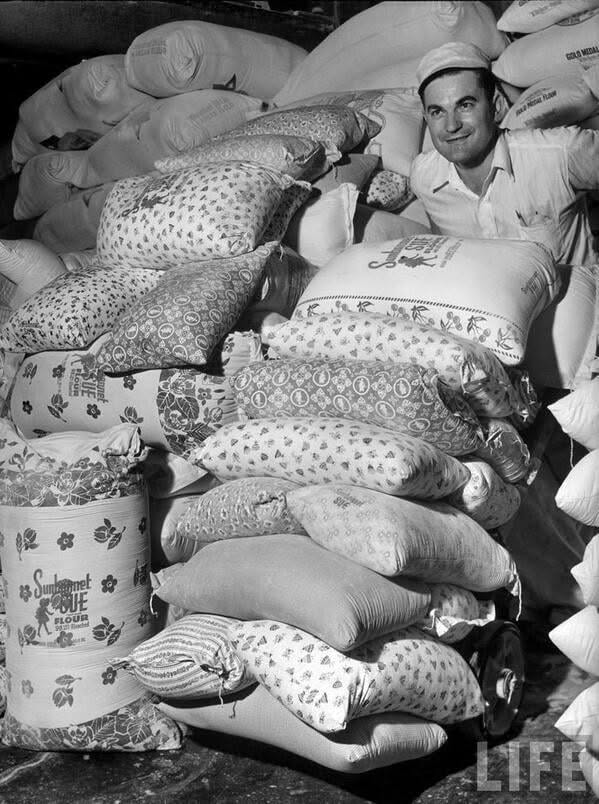
Women were already re-purposing the sturdy fabric into dresses, shirts, underwear, aprons, quilts, and other household goods. Eventually, manufacturers caught on. Rather than printing their sacks with nothing but company names and logos, mills began producing them in colorful floral and novelty patterns that could have a second life once their original contents were gone. Some even used inks designed to wash away more easily.
By the 1930s and 1940s, choosing a sack of flour or feed could involve more than deciding what was inside. A mother might be looking at the fabric, too – because several matching sacks could become her daughter’s next dress.
It was ingenuity born partly from necessity, but there is something wonderfully thoughtful about the manufacturers recognizing what women were already doing and adapting their packaging accordingly.
Buy the flour. Wear the sack. Waste absolutely nothing.
And suddenly today’s reusable shopping bag doesn’t seem nearly so innovative.

 Tiny Acorns & Mighty Oaks
Leave a comment