
In the fall of 1862, eighteen-year old James N. Jordan of Tecumseh, Michigan, enlisted in Company B of the 7th Michigan Cavalry. His older brother, William Cairns Jordan, was already serving with Company I of the 18th Michigan Infantry. Two sons from the same Tecumseh family had gone off to war.
James would never come home for good.
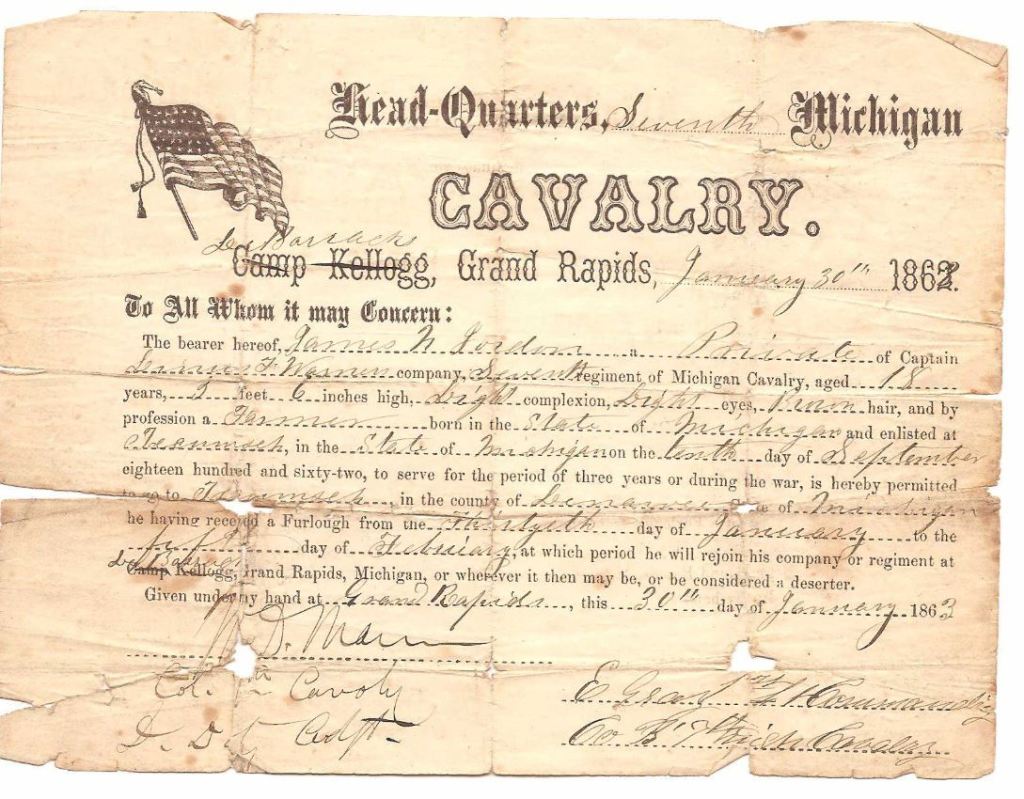
On January 30, 1863 while his regiment was still in Michigan, James was granted a furlough from Lee Barracks in Grand Rapids. His father, James J. Jordan (1808-1863), my 3x great grandfather, was gravely ill, and the young soldier was allowed to return home to his family. The distance home was about 140 miles.
His father died on February 5, 1863.
The original furlough survives in the family today, worn, folded, and stained from its journey more than 160 years ago. How it eventually found its way back into the family’s hands is something we may never know.
After his furlough, James returned to military service. Within weeks, the 7th Michigan Cavalry was sent east. By late March, the regiment was at Fairfax Court House, Virginia, serving in the defense of Washington. James’ regiment performed picket, scouting and railroad guard duties.
James’ war would end there – not on the battlefield, but from disease.
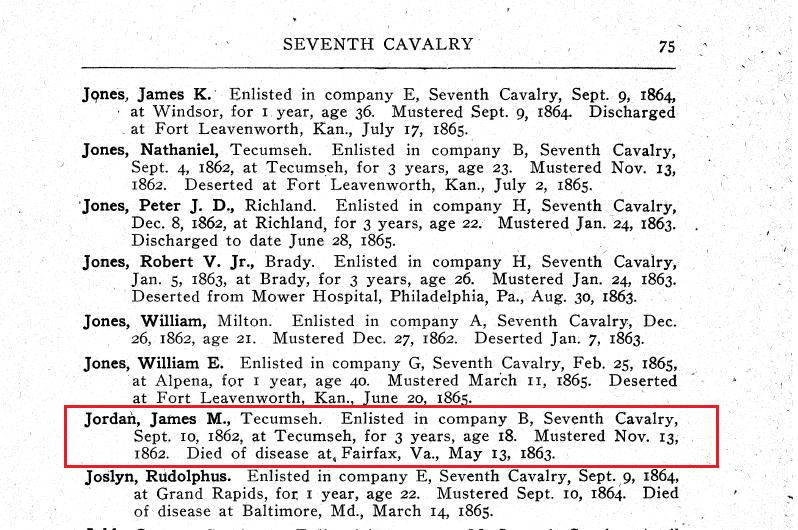
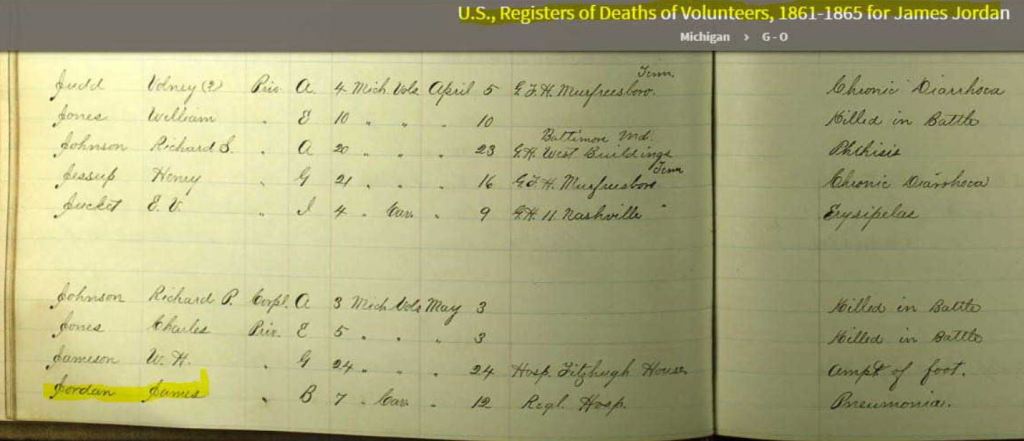
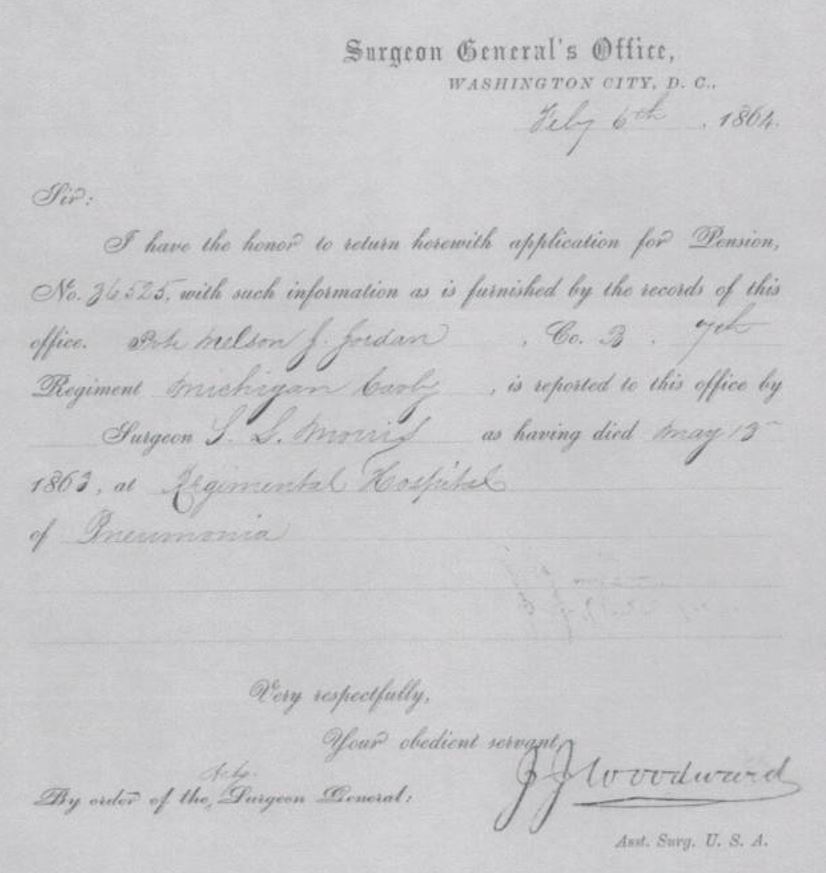
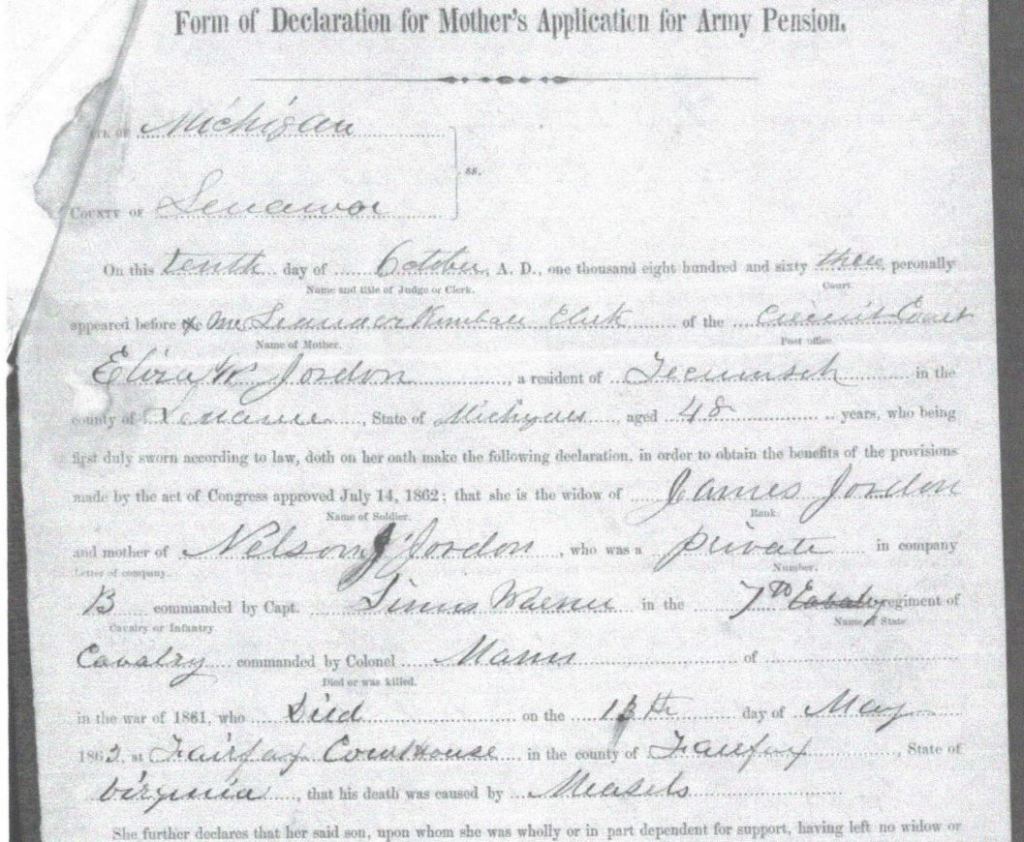
Military records do not entirely agree on the illness that killed him. Surviving records variously report measles, pneumonia, and dysentery. Such discrepancies are not unusual in Civil War records, and pneumonia was a frequent, and sometimes deadly, complication of measles. A U. S. military death register records that James died in the regimental hospital at Fairfax Court House on May 12, 1863. A later Michigan record gives his death date as May 15, and in the Surgeon General’s affidavit he records the date of death for ‘Nelson James Jordan’ as May 13.
He was only nineteen years old.
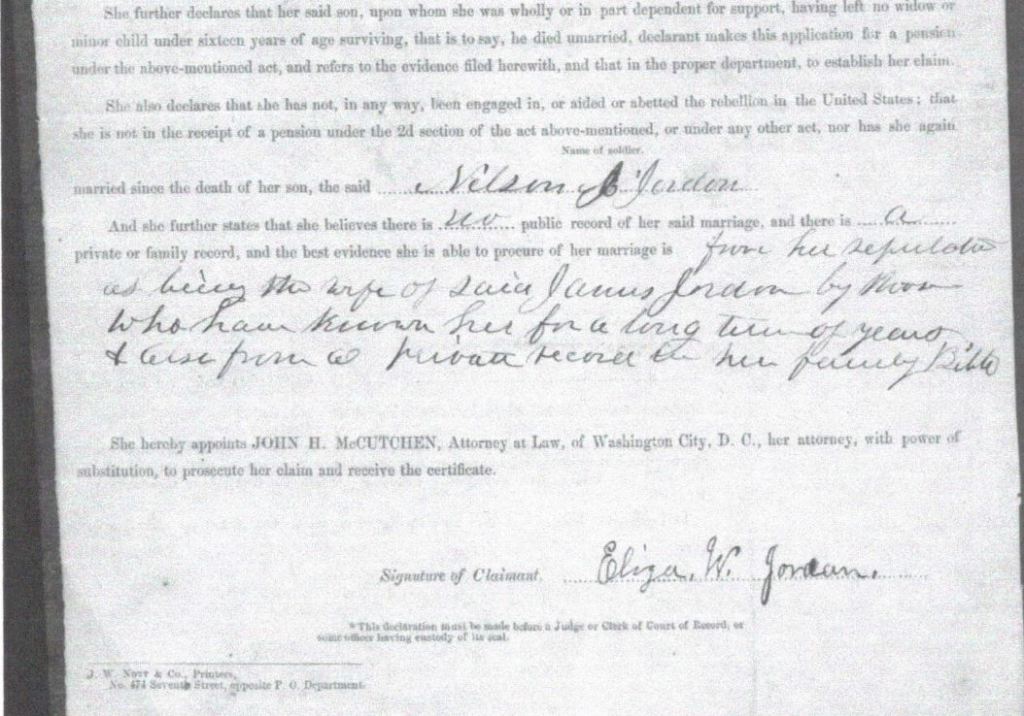
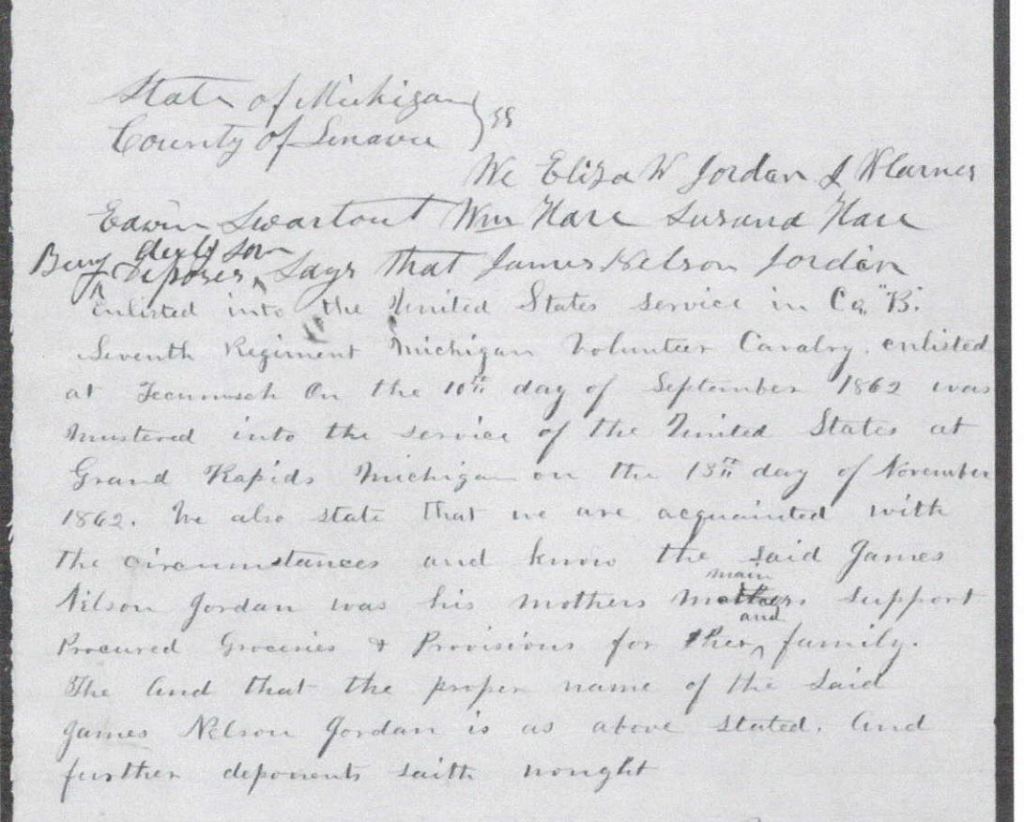
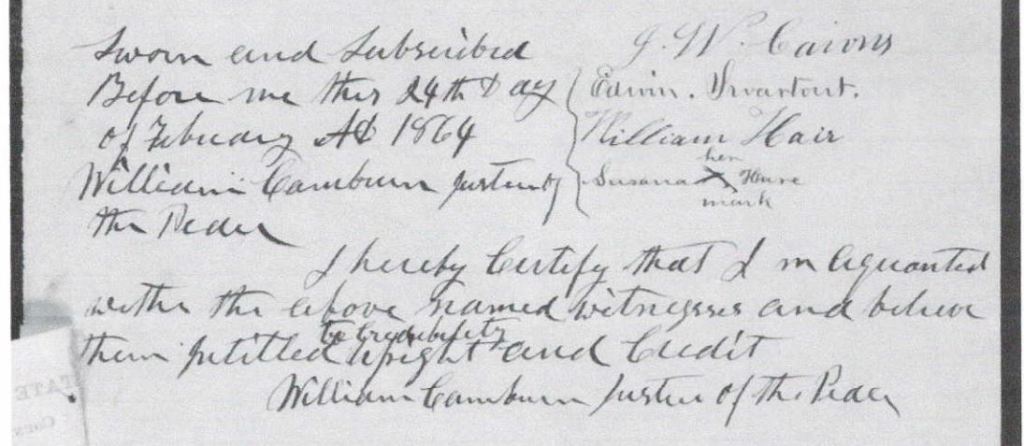
His mother, Eliza (Cairns) Jordan (1814-1887) had lost her husband just three months earlier. She later applied for a dependent mother’s Civil War pension, explaining that after her husband’s death, James would have been a source of support for her. In March 1864, she was granted a pension of $8 per month.
Meanwhile, James’ older brother, William, remained in the war. He survived his service with the 18th Michigan infantry and eventually returned to Tecumseh.
James never had that chance.
The 7th Michigan Cavalry would go on to fight at Gettysburg and numerous campaigns and battles before the war ended. But James Jordan’s service was over before most of that history had even been written.
What remains of his story is surprisingly tangible: military records, his mother’s pension claim – and that fragile furlough that once allowed a teenage soldier to make one last journey home while his father was dying.
More than a century and a half later, his family still has it.
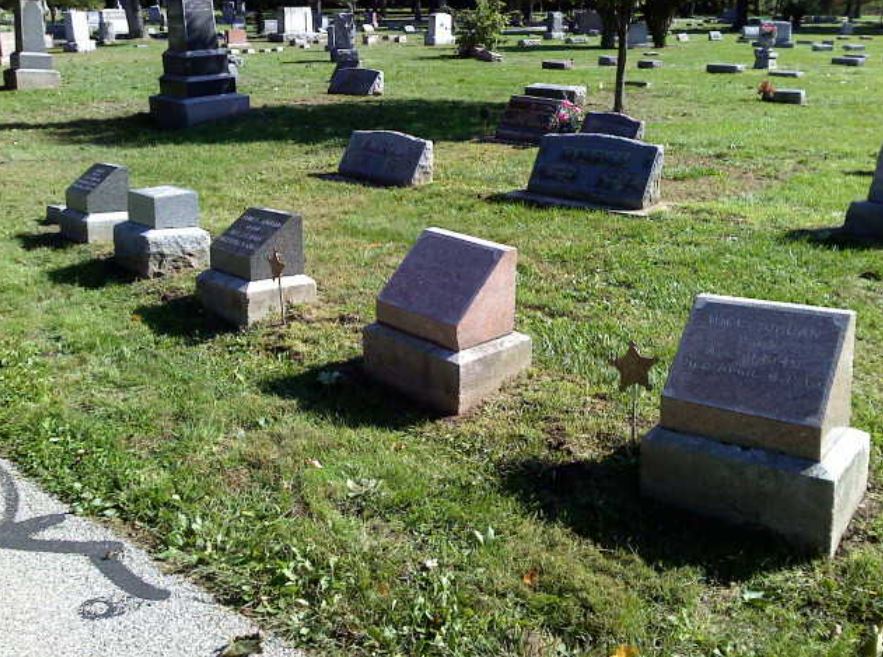
James, however, is not buried among them.


Leave a Reply