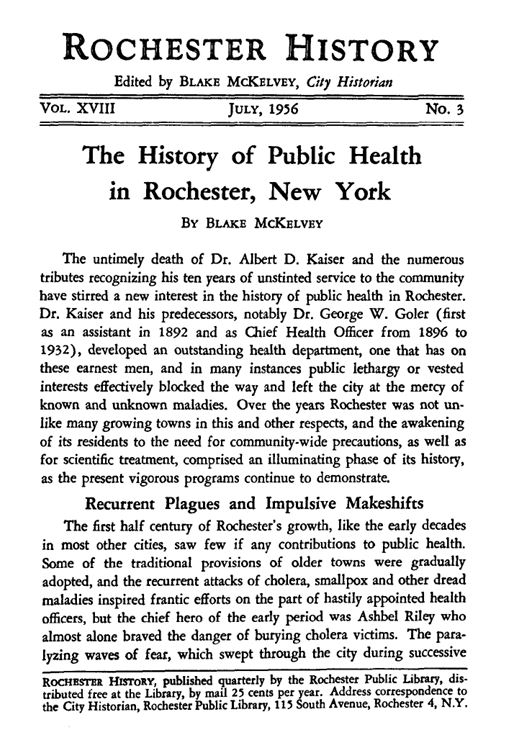
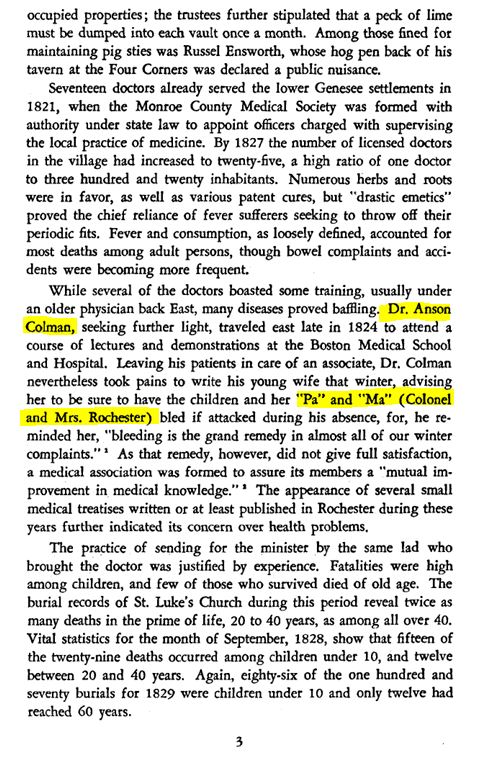
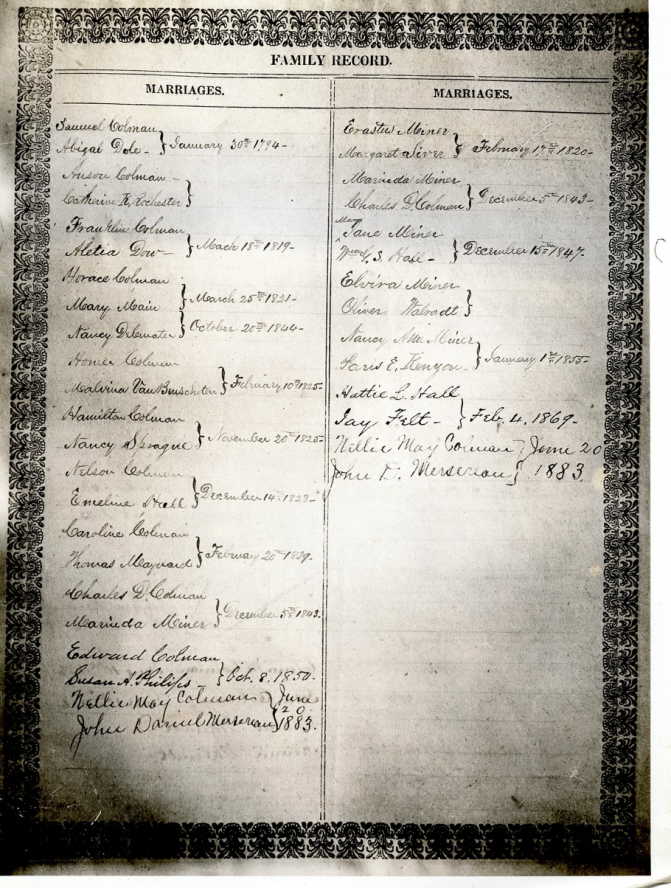
In 1824, Dr. Anson Colman (1795-1837) was 29 years old, practicing medicine in the Rochester, New York area during a time when American medicine was only beginning to become more organized and formerly taught. Wanting to expand his knowledge, he traveled east to attend lectures and demonstrations at the Boston Medical School – an impressive undertaking for a frontier physician of the era.
While away from his family, Anson wrote letters to his young wife, Catherine Kimball (Rochester) Colman, and advised that their children, as well as her parents, Colonel and Mrs. Rochester, should be bled if they became sick, reminding her that bloodletting was “the great remedy in almost all of our winter complaints.”
It sounds alarming now, but bloodletting was a widely-accepted medical treatment of the era. Even Founding Father and First President George Washington had been repeatedly bled during his final illness in 1799, losing an extraordinary amount of blood – a treatment some historians believe may have hastened his death. Anson’s instructions to his wife, Catherine, therefore, perfectly capture medicine at a crossroads: physicians were actively seeking better education and sharing medical knowledge, yet relying on treatments that had been used for centuries.
Eight years later, Anson’s medical career would place him in the middle of a far more frightening crisis.
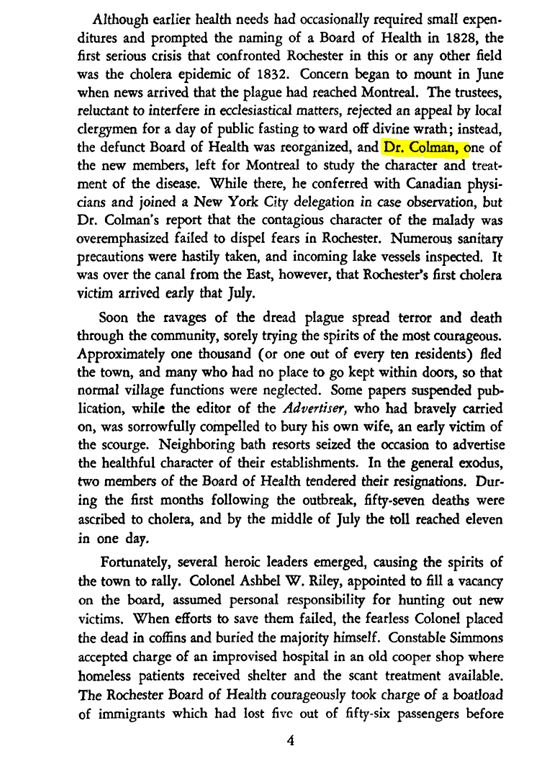
In 1832, as cholera moved toward western New York, Rochester’s newly organized Board of Health reportedly sent Dr. Colman to Montreal, where the disease had already appeared, to learn what he could about the epidemic. After returning, he became involved in Rochester’s preparations, including sanitary precautions and the inspection of boats arriving by lake and canal.
The city could prepare, but it could not keep cholera out forever. That summer, disease reached Rochester, part of the devastating cholera pandemic sweeping through North America. At a time when physicians did not yet understand bacteria or how cholera was actually transmitted, Anson and his colleagues were trying to protect their community with the limited medical knowledge available to them.
That makes his story particularly fascinating to me. Within less than a decade, we can see Dr. Anson Colman traveling to Boston in search of better medical training, recommending bloodletting to his own family, and then helping Rochester confront one of the most feared epidemics of the nineteenth century.
Dr. Anson Colman was the older brother of my 3X great grandmother, Caroline (Colman) Maynard, and this little glimpse from 1824 gives me something genealogy rarely does: not just his name and occupation, but a moment in his life – traveling to learn, worrying about the family he left behind, and practicing medicine exactly as doctors of his generation understood it.

 Tiny Acorns & Mighty Oaks
Leave a comment