
A few years ago, we drove 730 miles west to Kansas to attend a family wedding. In anticipation of the trip, I was scoping out historical sights to which I could drag my non-history-loving husband, when I stumbled across the Bender Homestead in Labette County, Kansas.
For those of you who have never heard of the Bloody Benders, a few relevant facts.
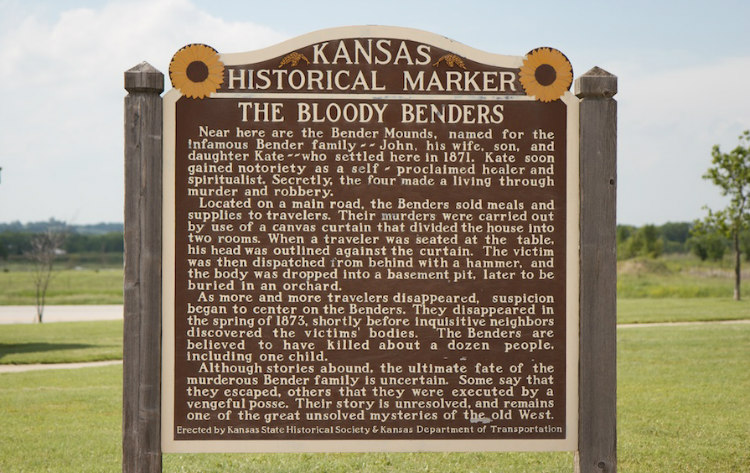
The appropriately-named Bloody Benders were a family of serial killers who ran a makeshift inn in southeastern Kansas, and murdered at least 11 travelers between 1871 and 1873. They are widely remembered as one of America’s first serial killer families. The family was comprised of the father, John Bender, Sr., mother Elvira, son John, Jr. and daughter, Kate who advertised herself as a ‘healer’ and spiritualist.
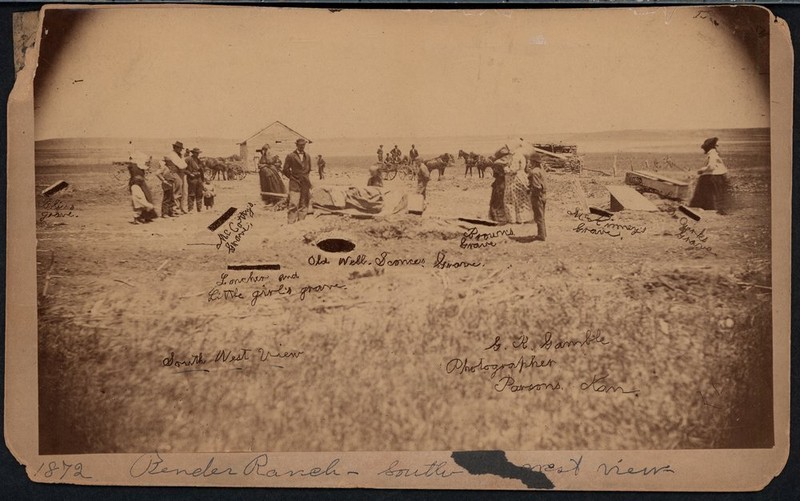
The Benders operated a primitive inn and grocery store out of their small one-room homestead along a well-traveled road in Kansas. There they offered food, supplies, and a place to rest for travelers crossing the prairie. A canvas curtain divided the house into two rooms. When a guest was seated at the table with his back to the curtain, a member of the family would strike him in the head with a hammer from behind. The victim was then dropped through a trapdoor into the cellar, his throat cut, and any valuables removed. The bodies were later buried on the property.
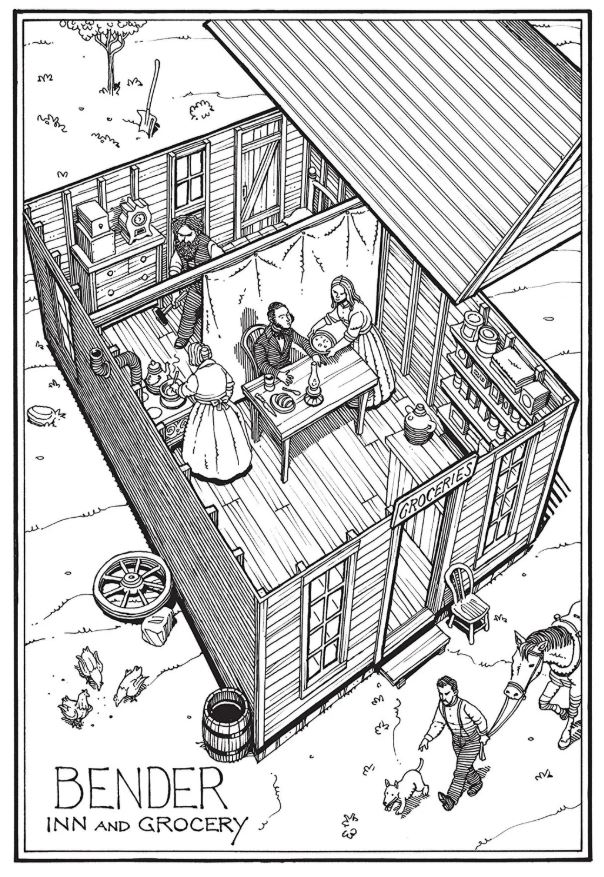
Unfortunately the Bender Homestead was more than two hours from our wedding destination and the weekend was too full to make the day trip.
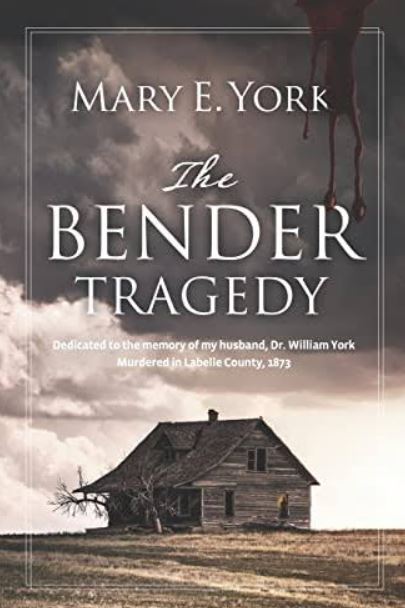
However, since I had never heard of this notorious family before and was deeply intrigued, when I returned home I read the book ‘The Bender Tragedy: Dedicated to the Memory of My Husband, Dr. William York Murdered in Labette County, 1873″ by Mary E. York, wife of one of the Bender family’s victims, Dr. William York. It was York’s disappearance in March 1873 that helped unravel the case. When the doctor failed to return home from a trip, his family began searching for him. His brother, Kansas Senator Alexander M. York, eventually traced his travels to the Bender property. What was ultimately discovered was gruesome.
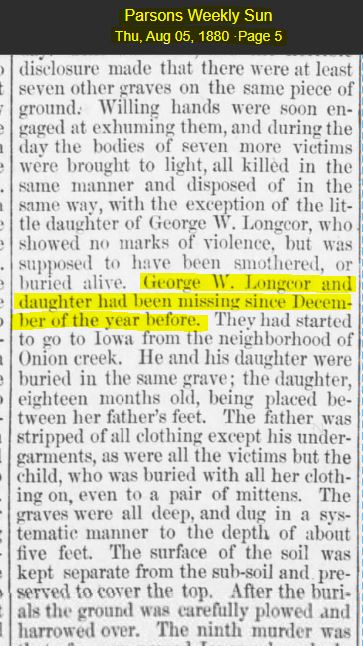
Among the Bender’s victims were a young widower, George Newton Longcor and his toddler daughter. After the deaths of George’s wife and infant son, father and daughter were apparently preparing to return to George’s family in Iowa when they disappeared. Their bodies were later found buried together on the Bender property. Historical accounts differ on some details of the child’s age and even on the spelling of the family name, but contemporary reports describe the little girl as having suffered no obvious injuries.
And here’s where George ties into Charles “Pa” Ingalls history.
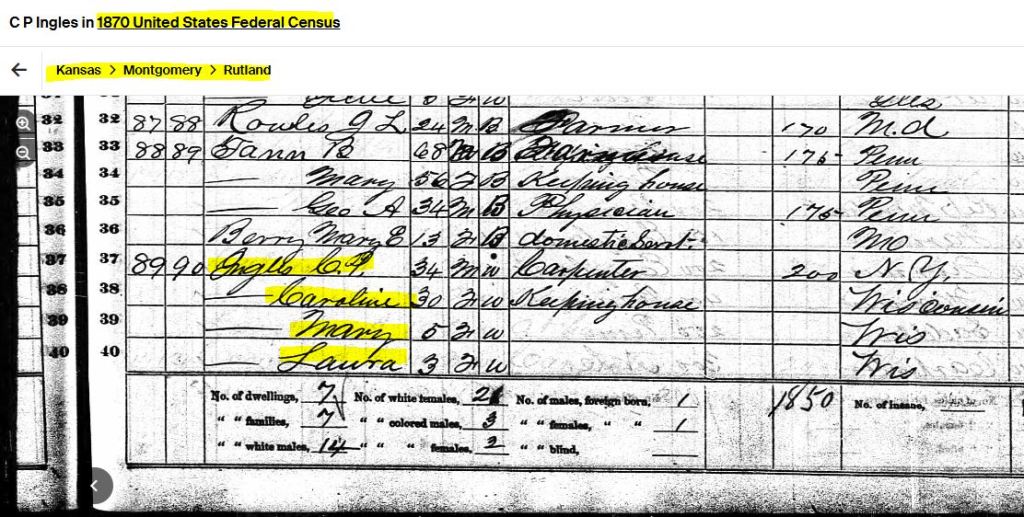
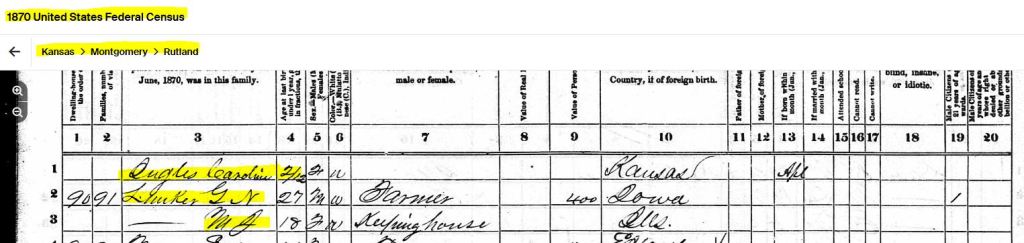
In the 1870 federal census for Rutland Township, Montgomery County, Kansas, we find 34-year old Charles P. Ingalls, his wife Caroline, and three daughters: 5-year old Mary, 3-year old Laura and 2-month old Carrie.
Appearing immediately after the Ingalls household in that census is their neighbor, George Newton Longcor, and his young wife, Mary Jane.
Three years later, the Longcor family would be gone. Mary Jane and the couple’s infant son had died, and George and his little daughter would become victims of the Bloody Benders.
That alone is an extraordinary intersection of two very different pieces of American history.
The Benders also became part of the Ingalls family story years later. Laura Ingalls Wilder and her daughter, Rose Wilder Lane, both told versions in which Charles Ingalls knew of the Benders, and Wilder later claimed that her father had participated in the hunt for them.
There is a problem with that story.
The Ingalls family had already returned to Wisconsin by the time the Benders’ crimes were discovered in 1873. Modern Wilder historians, therefore, question whether Charles Ingalls could actually have participated in the search for the killers. The Bender episode does not appear in Wilder’s original handwritten “Pioneer Girl” manuscript; Rose Wilder Lane introduced it into later versions. Laura herself later told a dramatic version of the story in a 1937 speed.
So Charles Ingalls’ actual involvement with the Benders remains murky.
But this much is documented: the Ingalls and George Loncor were neighbors in Kansas in 1870, and three years later Longcor and his little daughter were among the victims buried on the Bender property.
Sometimes the most fascinating pieces of history are hiding on the very next line of a census.


Leave a comment