
As I am always on the hunt for good historical books that don’t read like dry and overly-complicated textbooks, I was excited to discover The Taking of Jemima Boone: Colonial Settlers, Tribal Nations, and the Kidnap That Shaped America by Matthew Pearl.
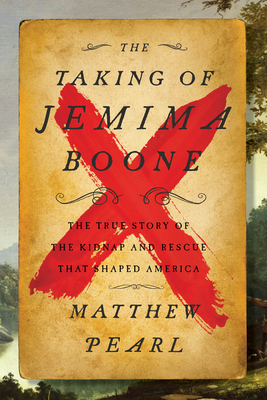
Listening to the audiobook version, I am amazed at how little I knew about Kentucky and the fact that during the early years of the Revolutionary War, Kentucky was actually America’s frontier.
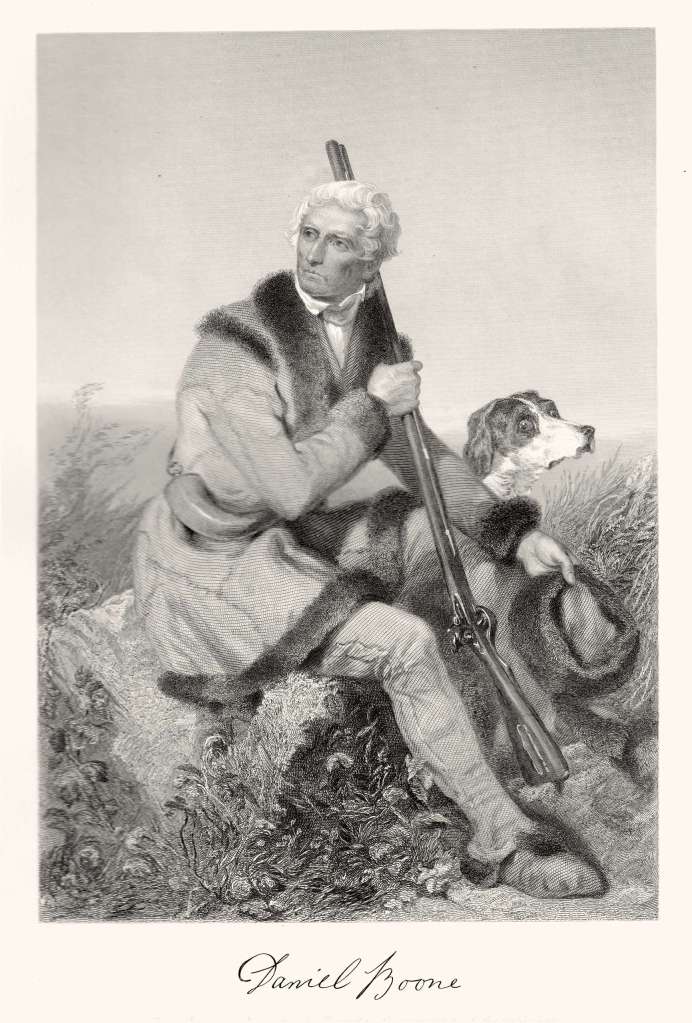
When thinking of Daniel Boone, we often flashback to the actor Fess Parker, who portrayed him in the popular television series during the 1960s. There he was, wearing his coonskin cap, carrying his rifle, and having one adventure after another. But as is so often the case with history, the real story is much more complicated than what Hollywood would have us believe.
Daniel Boone was born in Pennsylvania in 1734 and became one of America’s best-known frontiersmen, hunters, and explorers. In 1775, he helped establish a route through the Cumberland Gap into Kentucky, opening the way for settlers traveling west. He also helped establish Boonesborough, one of Kentucky’s earliest permanent European-American settlements.
But it wasn’t Boone’s exploits that initially caught my attention. It was the story of his daughter, Jemima.
On July 14, 1776, just ten days after the Declaration of Independence was adopted in Philadelphia, thirteen-year-old Jemima Boone was enjoying an outing on the Kentucky River with two sisters, Elizabeth and Frances Callaway.
The three girls were captured by a group of Shawnee and Cherokee warriors and taken away from the settlement. Their captors intended to take them north, toward Native American communities beyond the Ohio River to be used as political bargaining chips.
Daniel Boone and a group of men from Boonesborough quickly organized a rescue effort. The girls, realizing that someone might come looking for them, attempted to leave clues along the way to help their rescuers follow their trail. These crumbs included torn bits of a handkerchief, wooden heels dug deeply into the trail to leave lasting impressions, and the ribbon from Jemima Boone’s bonnet in which she knotted five clues—a hopeful indicator to their rescue party that they were trailing five Native American captors.
The men eventually caught up with the group, and after a violent confrontation that resulted in two Native American deaths, all three girls were rescued and returned to Boonesborough.
Jemima later described her captors, including Cherokee leader, Hanging Maw, as having treated the girls with kindness under the circumstances. It’s a reminder that even within a terrifying event, history isn’t always as straightforward as we might expect.
And here is another interesting twist to the story.
One of the men who helped rescue Jemima was Flanders Callaway, a relative of the two sisters who had been kidnapped with her. Jemima would eventually marry Flanders, who was approximately ten years older than she was. According to historical family records, they married in 1777, when Jemima was just fourteen years old and Flanders was twenty-four. The couple went on to have ten children (some accounts record 11).
But the kidnapping had consequences far beyond the three girls and their families.
Life at Boonesborough was already precarious. Settlers were living in a remote wilderness, far from established colonial communities, and the threat of violence was an everyday concern.
The kidnapping brought those dangers even closer to home.
Families who had traveled west hoping to establish new lives began questioning whether remaining in Kentucky was worth the risk. Many settlers abandoned their homes and returned east, leaving those who stayed behind increasingly vulnerable.
The fewer settlers who remained, the more difficult it became to defend the settlements. Every family that left meant fewer people to help maintain the fort, gather food, and protect the community.
By the spring of 1776, fewer than 200 settlers remained in Kentucky’s principal fortified settlements.
Of course, there is another side to this story, and one that author Matthew Pearl does an excellent job of explaining.
We tend to learn about America’s westward expansion through the experiences of the pioneers. Brave men and women traveling into unfamiliar territory, building homes, and creating communities.
But that land wasn’t simply sitting there waiting for someone to claim it.
Native American nations had long-standing connections to Kentucky, using its lands for hunting, traveling, and sustaining their communities. The Shawnee, Cherokee, and other nations had their own interests, alliances, and disagreements over who had the authority to negotiate away those lands.
As colonists continued pushing westward, Native communities were faced with increasingly difficult decisions.
Some Native leaders negotiated agreements with colonial interests, while others rejected those arrangements, particularly when agreements involved land claimed or used by nations that had never consented to surrender it.
And then came the Revolutionary War.
While the American colonists were fighting Great Britain for independence, Native nations were faced with another complicated question: Which side, if either, offered the best chance of protecting their people and their homelands?
Some allied themselves with the British, believing that a British victory might help slow American expansion into their territories. Others pursued different alliances or tried to avoid becoming entangled in the conflict.
There was no single Native American position, just as there was no single colonial position.
And I think that’s one of the most fascinating aspects of this book. It presents a period of American history that is so much more complicated than the familiar stories of heroic pioneers and hostile Indians that many of us grew up hearing.
The settlers feared for their lives and the safety of their children. Native nations feared losing their lands, their independence, and their way of life.
Both realities were part of the same history.
I have always loved discovering the stories behind the history we think we know, and The Taking of Jemima Boone is an excellent example of why.
What initially appeared to be a book about the kidnapping of a thirteen-year-old girl turned out to be a fascinating look at Kentucky’s early settlement, the Revolutionary War on the western frontier, and the complicated relationships between settlers and Native American nations.
Matthew Pearl has a wonderful ability to take historical events, explain the larger circumstances surrounding them, and make the people involved feel like real human beings rather than names and dates in a history book.
If you enjoy American history, particularly the lesser-known stories that challenge what you thought you knew, this book is well worth your time.
And if you’re an audiobook listener like me, I highly recommend giving this one a listen.
Note: There are a several photos reported to be Jemima Boone copied (and re-copied) to Ancestry members profiles. These are erroneous; no known copy of a photograph of Jemima Boone exists. She died in 1834, prior to the common use of photography in everyday lives. Another reminder that when documenting family trees it’s extremely important to verify information (does it make sense and can it be proven by secondary sources?).


Leave a Reply