Several years ago, I became engrossed with historical cooking. To dig deeper into the topic, I downloaded the audio version of ‘The Cooking Gene: A Journey Through African American Culinary History in the Old South’ by Michael W. Twitty. Unfortunately the listening proved to be a little more academic than I was hoping for, so I changed direction and downloaded ‘Bound to the Fire: How Virginia’s Enslaved Cooks Helped Invent American Cuisine’ by Kelley Fanto Deetz.
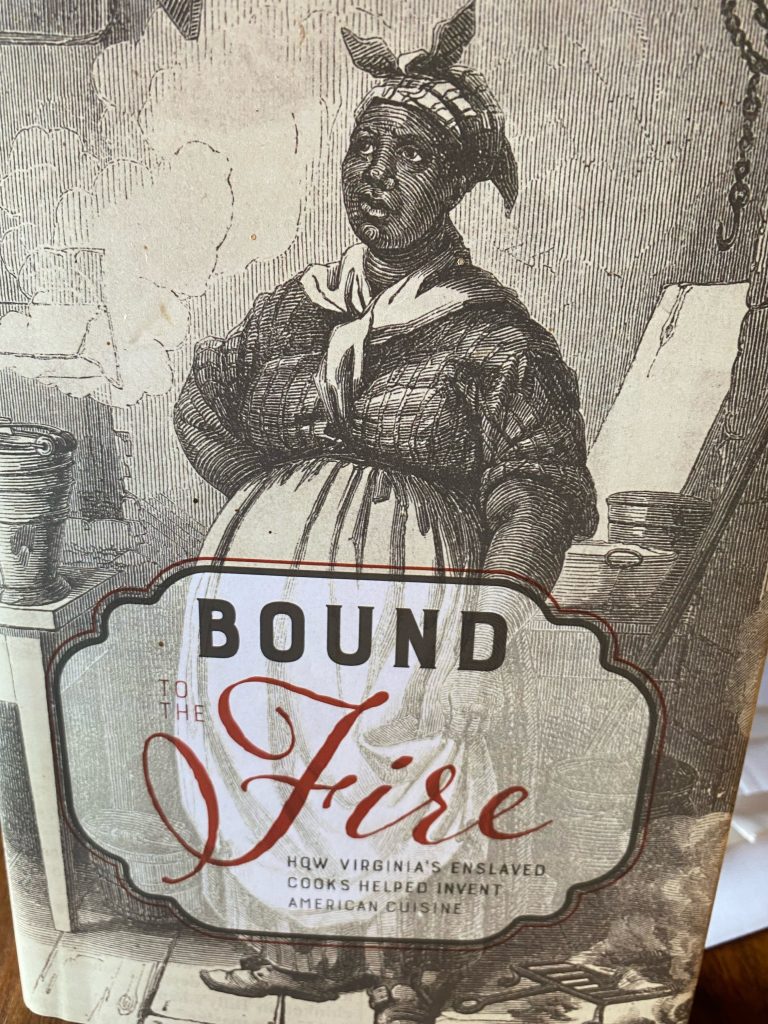
If you’re curious not only about cooking practices from the past, but also the intriguing culture of Virginia plantations in the 1600’s through the mid-to-late 1800’s, I would highly recommend ‘Bound to the Fire’. The Audible version has a great narrator which is always a plus.
One thought that has stuck with me after listening to the book is the incredible amount of effort it took to make even a basic meal. There were no microwavable dinners, fast food runs, or prepped anything. Without modern refrigeration, food preservation was also a constant concern. Ingredients might be stored in a cool springhouse or preserved through methods such as drying, smoking salting, or pickling, but there certainly wasn’t a refrigerator or pantry overflowing with ready-to-eat food.
In other words, there was very little grabbing and stuffing. If you wanted something to eat, you first had to the consider the ingredients, the time and labor involved and perhaps ask yourself “Hmmm, am I really that hungry?” It’s not difficult to imagine how the sheer effort involved in preparing food limited the kind of mindless eating that is so easy today.
And since “Bound to the Fire” focuses specifically on enslaved cooks in the Antebellum South, one section of the book details the daily life of an enslaved cook in Virginia. From pre-dawn to evening, their to-do list was absolutely staggering, beginning with getting the unpredictable hearth fire built each morning and maintained throughout the day at the correct temperature. Note that stoves and ovens didn’t come into existence until the mid-1800’s. Even with that invention, ovens still presented the challenge of variable temperatures with the firewood fuel, especially when baking. Cooks had to possess impressive skill and talent to create successful meals as every single thing about cooking then was difficult. If you were considered a master in the kitchen in the 1600s to 1800s, you would have been a highly-skilled individual and to the Virginia plantation life, extremely valuable.
As a cook, you would also have had to been physically strong to lift the cast iron pots filled with food and to, at the end of the day, scrub out those pots. If you ever make your way over to Bed Bath and Beyond, pick up one of those hefty cast iron skillets then imagine how heavy a cast iron cauldron would have been, especially full of stew. Baking bread, an every-single-day task required at least 30 minutes of kneading and would have required great strength, patience, and skill.
Two more interesting facts I gleaned:
- Most Virginia plantations had slaves whose specific task was to fish and gather oysters. Apparently good fishermen slaves were a highly-prized commodity. I don’t think I’ve ever thought of slaves as fishers, however, fish and shellfish was readily available in that region and eaten daily on the plantations.
- Unlike the slave population as a whole, many cooks were taught to read in order to decipher recipes given to them by their mistresses. The cooks, having acquired that skill, were often utilized by the other slaves to read to them and write for them. Cooks were also taught arithmetic as double and tripling recipes dependent on the size of the crowd the mistress was entertaining, would require math skills and knowledge of fractions.
The next time we admire the elaborate meals served on Southern plantations, perhaps we should remember that the real culinary legacy belongs not to the people at the table, but to the enslaved men and women who made the meal possible.


Leave a Reply