
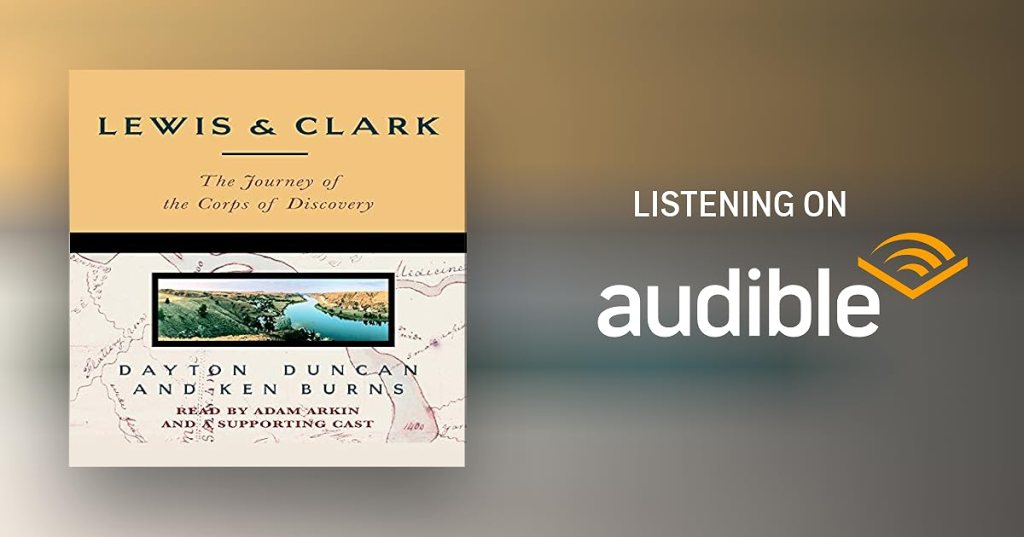
Having finished the Audio book, “Lewis & Clark” by Dayton Duncan and Ken Burns, I have become completely obsessed with learning more about their expedition.
One of the most sobering things to me is how quickly the American West changed. When President Thomas Jefferson sent the Corps of Discovery, lead by Meriwether Lewis and William Clark, West in 1804, most of the vast territory they traveled was still controlled and inhabited by Native nations. For many of the people Lewis and Clark encountered, the arrival of an official American expedition was an early indication of the enormous changes that were coming.
Consider the timeline. Lewis and Clark departed in 1804 and returned east in 1806. Their journey covered nearly 8,000 miles round trip. Just seventy years later came the Battle of Little Bighorn in 1876. The following year in 1877, Chief Joseph and the Nez Perce surrendered only about 40 miles from the Canadian border, after their remarkable attempt to escape the United States Army.
In little more than a single lifetime, the American West had been transformed. Native peoples who had inhabited these lands for thousands of years faced warfare, forced removal, broken treaties and confinement to reservations as American settlement pushed relentlessly westward.
That is perhaps what I find most staggering. Lewis and Clark traveled through a West that would have been almost unrecognizable only a few generations later. Jefferson reportedly believed it might take a century for Americans to populate the West. The pace of expansion proved far faster than anyone could have imagined.
Of interest to note, Meriwether Lewis had been Thomas Jefferson’s private secretary before the expedition. His life afterward was sadly brief and troubled. He died in Tennessee in 1809 at only 35 years old, before completing the comprehensive account of the expedition that he had intended to write.
It’s also worth mentioning that in this Audio book narrated by Ken Burns, he pronounces the name of their Indian guide, Sacagawea much differently than what we were taught in the classroom. We would call her SACK-A-JAH-WEE-AH. Ken Burns, American’s most famous and revered historian, pronounces it SUH-KAH-GAH-WEE-AH.

Historical Trivia: During the Lewis & Clark expedition, lacking meat sources, they often bought large quantities of dogs from the Indian tribes and ate them. They also ate many horses.


Leave a Reply