
Most of us learned a fairly tidy version of the Mayflower story in school. A ship full of Pilgrims crossed the Atlantic in 1620 in search of religious freedom, landed in a strange new wilderness, struggled through a terrible first winter, and – with the help of the Native people they encountered – managed to survive.
That story isn’t exactly false.
It’s just missing a few things.
For starters, not everyone aboard the Mayflower was a Pilgrim. The religious Separatists were actually only part of the passenger list. Others made the voyage for economic opportunity or adventure, and the group also included servants, laborers, and children. And among the people hired to help protect the new colony, was a professional soldier, Myles Standish.
Standish was a small man with a rather large personality. He eventually became the military leader of Plymouth Colony, and earned a reputation for being aggressive, hot-tempered and, at times, downright ruthless.
But some of the most uncomfortable parts of the story happened before Plymouth Colony was even established.
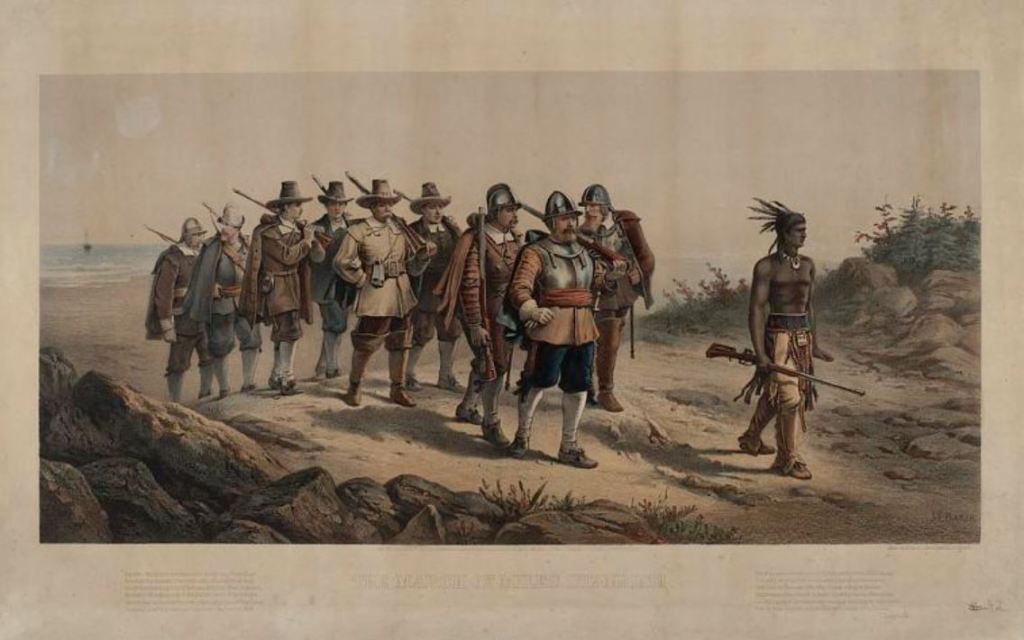
While the Mayflower sat off Cape Cod, groups of men went ashore searching for a suitable place to settle. During one of these expeditions, they discovered stores of corn buried underground.
The corn belonged to the Native people who lived there.
The newcomers dug it up and took it.
They also came across Native graves, opened some of them, and removed items they found. In another location, they entered dwellings and took provisions and belongings that were left behind.
The Englishmen understood that these things did not belong to them. Their writings indicate that they intended to compensate the Native people later.
Eventually, some restitution was made.
But at that moment, stranded on an unfamiliar coast and desperate for food, they took what they needed from people they had not even properly met.
And then comes one of the greatest ironies of the Plymouth story.
Within months, roughly half of the Mayflower passengers would be dead. Disease, exposure, and malnutrition devastated the settlement during that first winter. The survivors desperately needed help learning how to live in their new environment.
And help came from the very Native people whose land they had entered – and whose food they had taken.
That part of the story has always fascinated me because history becomes much more interesting when we stop requiring it’s people to be heroes or villians.
They were people.
They were frightened. They were hungry. They were ambitious. They were capable of extraordinary courage and astonishing cruelty – sometimes within the same story.
I have ancestors who arrived in America during the early colonial period, although they came somewhat later than the Mayflower. When I read accounts like this, I can’t help wondering about them.
What did they think about the Native people already living there?
Did any of them question what was happening around them? Did they have misgivings about the way Native communities were displaced and treated? Or did they simply accept the attitudes of the seventeenth-century European world into which they had been born?
I’d like to imagine that at least a few of them questioned it.
But genealogy has taught me something about ancestors:
We don’t get to turn them into the people we wish they had been.
We only get to discover who they were.
And sometimes history is considerably messier than the version we learned in elementary school.


Leave a Reply