
Some family stories leap off the page. This is one of them.
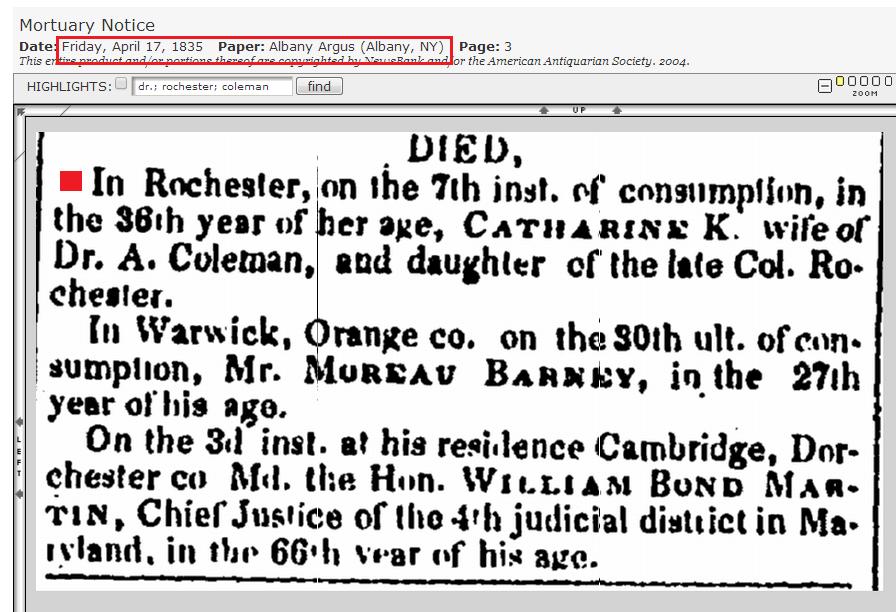
My first cousin, four times removed, Edward Colman, was born in 1828, the son of Dr. Anson Colman and Catherine (Rochester) Colman. Edward was also the nephew of my 3X great grandmother, Caroline (Colman) Maynard.
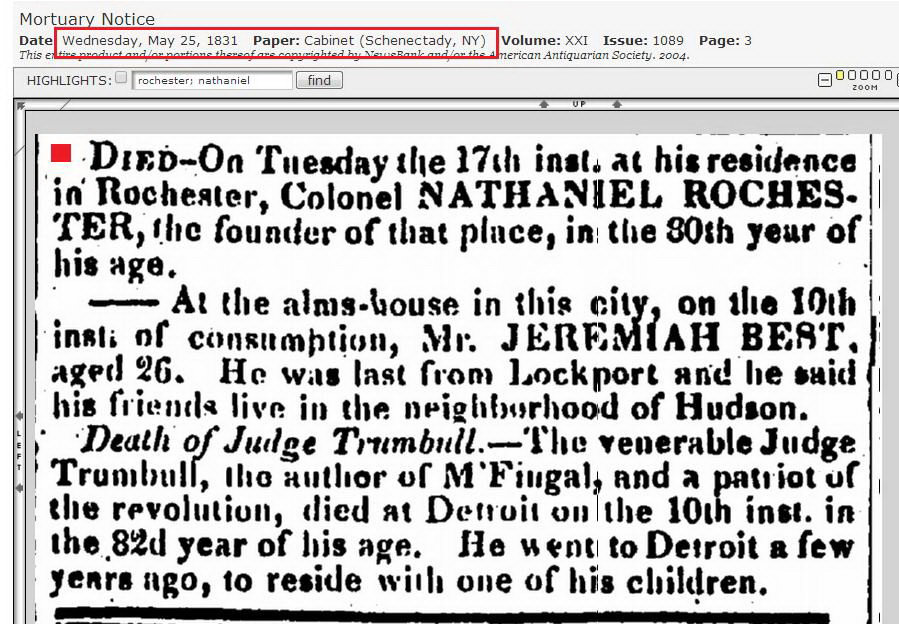
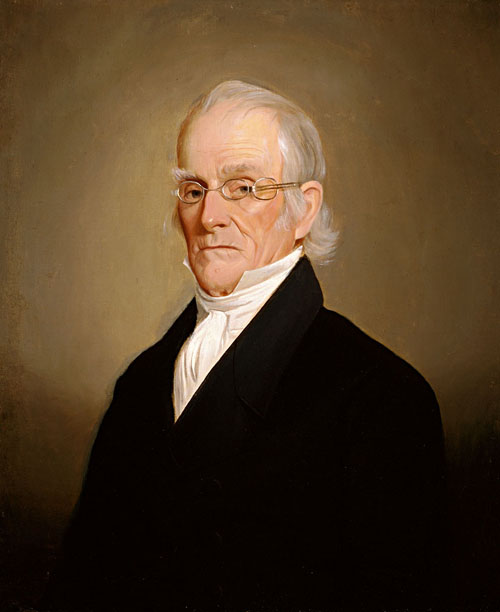
There is another interesting piece of history tucked into Edward’s family tree. His mother, Catherine Rochester, was the daughter of Colonel Nathaniel Rochester, one of the founders of Rochester, New York, and the man for whom the city was named.
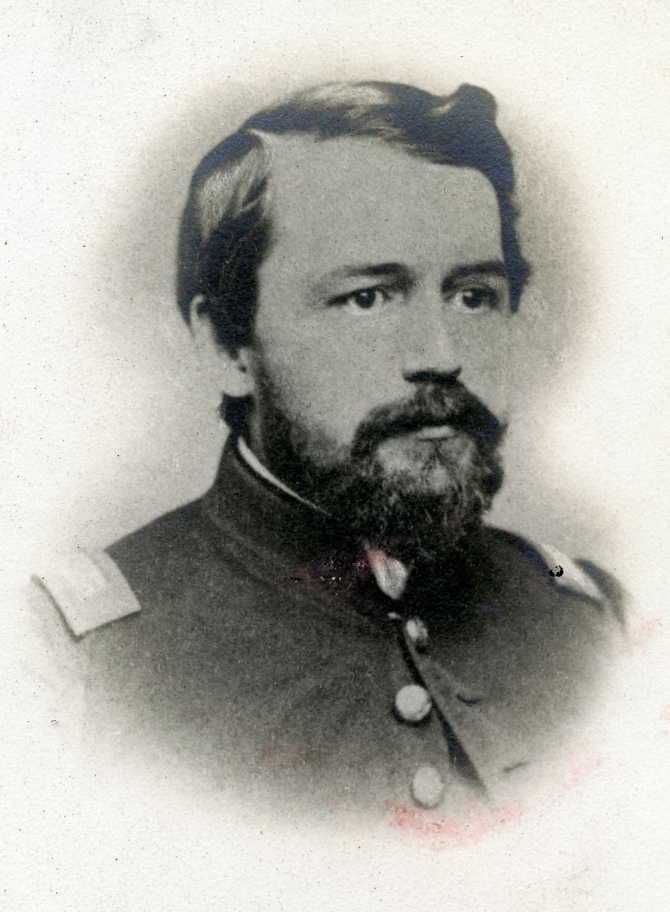
Edward, however, would make his own mark on history during the Civil War.
Edward served as an officer with the 18th Wisconsin Infantry. On April 6, 1862, his regiment found itself in the midst of the Battle of Shiloh in Tennessee, one of the bloodiest battles the country had experienced to that point.
During the fighting Edward was shot in the face.
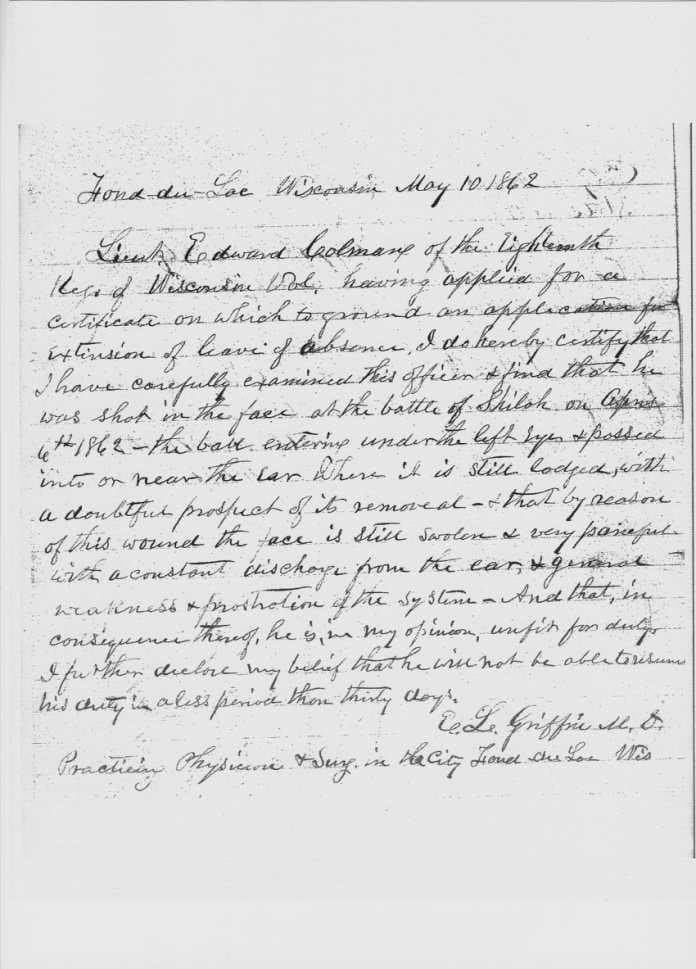
A physician’s certificate written little more than a month later, on May 10, 1862, describes his condition in remarkable – and rather gruesome – detail.
The ball entered beneath Edward’s left eye, traveled through his face and lodged near his ear. It was still there when the doctor examined him, with what he described as a “doubtful prospect” of being able to remove it. Edward’s face remained swollen and extremely painful, and he was suffering from a constant discharge from the ear as well as general weakness and exhaustion.
The physician, E.L. Griffin, M.D., concluded that Edward was unfit to return to duty and believed he would remain so for at least another thirty days.
What strikes me about documents like this is how much they changed the way we read a military record.
A service record might simply tell us that a solider was wounded at Shiloh on April 6, 1862. One short line. A date and a notation.
But this letter tells us what “wounded” actually meant.
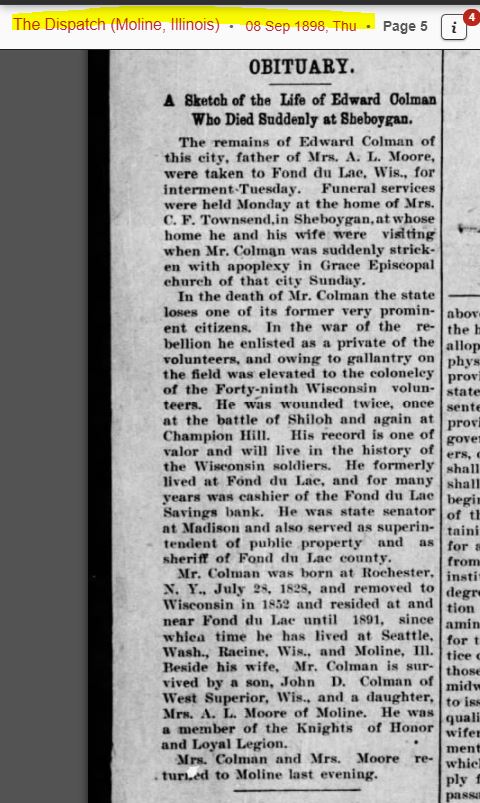
Shiloh was not the end of Edward’s Civil War service. He was wounded again at the Battle of Champion Hill and eventually rose to the rank of colonel of the 49th Wisconsin Infantry. After the war, he returned to civilian life and held several prominent positions in Wisconsin, including state senator, superintendent of public property and the sheriff of Fond du Lac County. For many years, he was also cashier of the Fond du Lac Savings Bank.
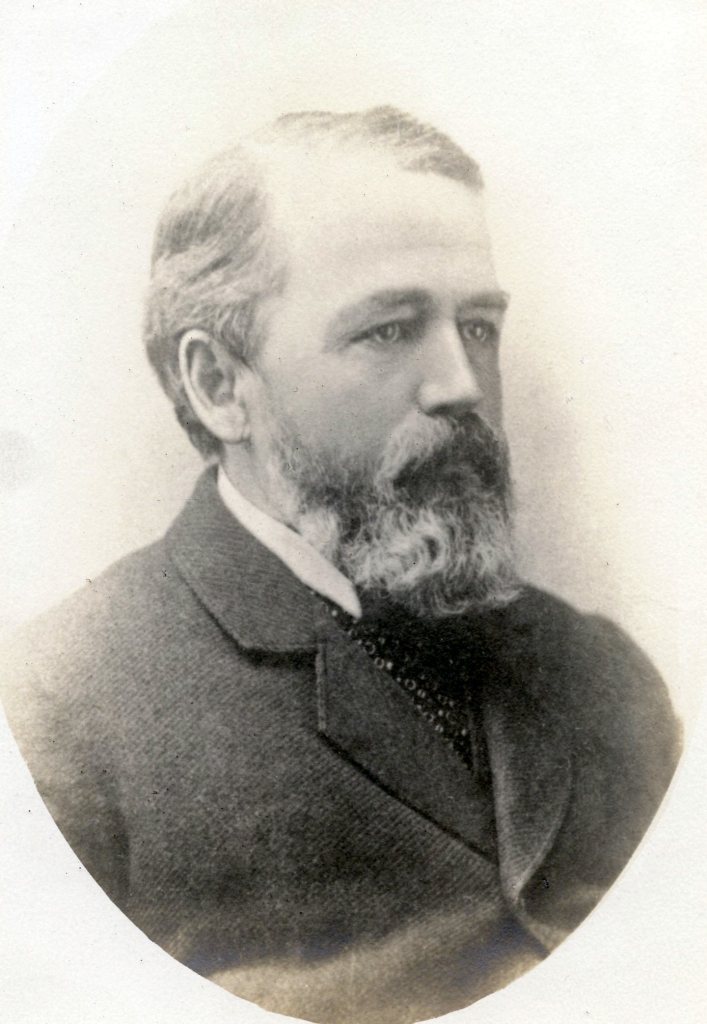
Edward survived his terrible injury and lived another thirty-six years, dying in 1898 at the age of about seventy.
More than 160 years later, I can look at this photograph and read the words of the doctor who examined him just weeks after Shiloh. Suddenly we are standing remarkably close to a life-changing moment for one of our ancestors. It’s fascinating, stunning and sobering all at the same time.

 Tiny Acorns & Mighty Oaks
Leave a comment