
Sometimes the most interesting pieces of family history are hiding in a single sentence.
While searching old newspapers, I came across an article in the September 8, 1894, Sandusky Register about Huron County, Ohio. Near the end, the wandering correspondent stopped to mention a familiar name:
“Almon Hunt is the oldest man here; he is 86 and has the promise of many years to come. He is the only man living who was present when a few Indians were hung in Norwalk, O.”
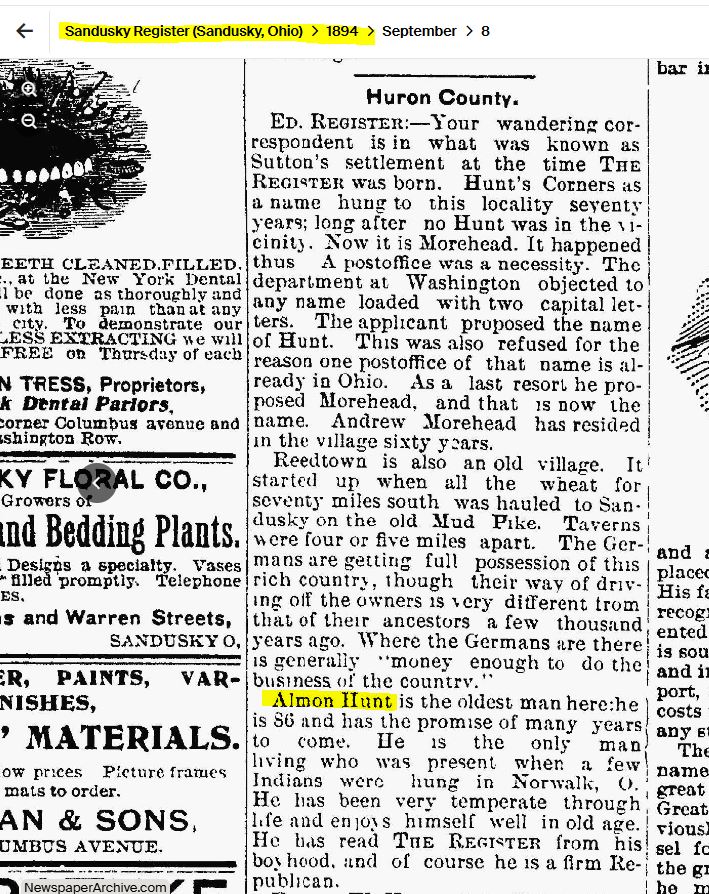
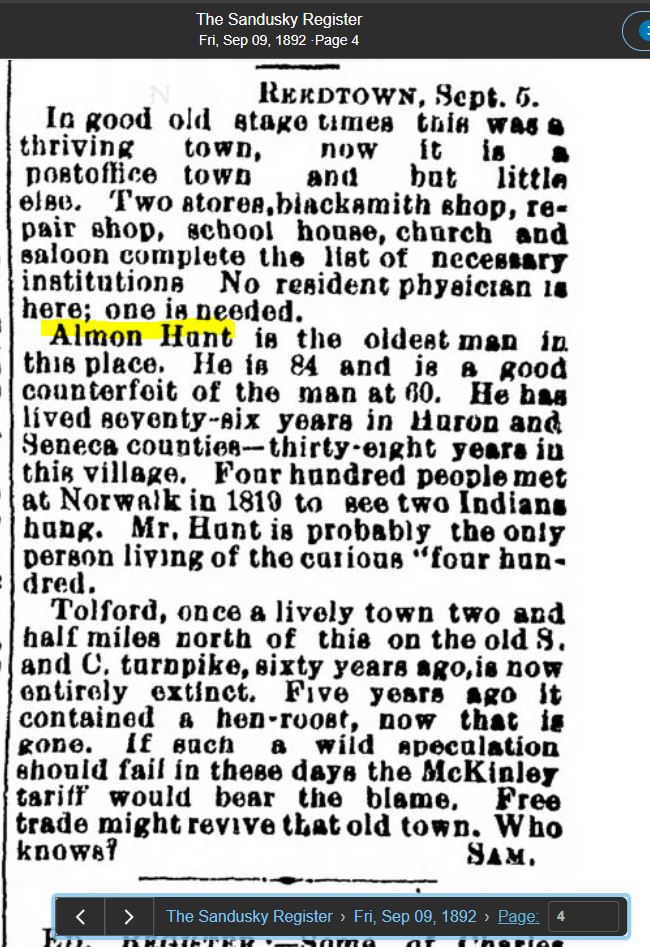
Almon Hunt married Cynthiana Walker, my 3X great grand aunt, and is connected to my Walker family. I recently wrote in another blog about the letter Almon had written, so naturally that one sentence sent me looking for the story behind it.
The event Almon witnessed occurred 75 years earlier, on July 1, 1819 when he was only about eleven years old.
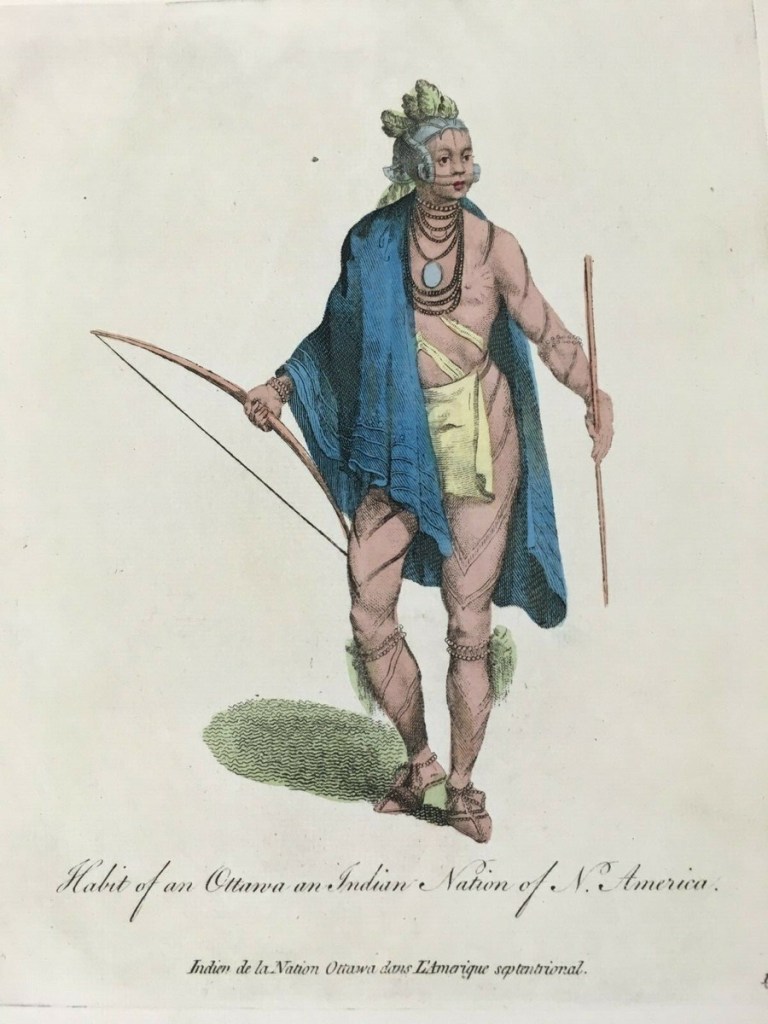
Two Ottawa men, Negosheek and Negoneba, had been convicted in Norwalk (Ohio) of the murder of two white hunters, John Wood and George Bishop. A third, younger Native American who had been arrested with them was not prosecuted. The two men were sentenced to death, and their execution became a major public event in what was then still a small frontier community.
Historical accounts differ somewhat on the exact circumstances of their deaths, but the event itself became part of the history of Norwalk and Huron County.
And apparently, eleven-year old Almon Hunt was there.
The trial and execution marked a definitive end to violent frontier conflicts between remaining indigenous bands and early settlers in the Firelands region of Ohio, shortly before the broader forced removal of the Ottawa to reservations and eventually west of the Mississippi.
By the time the Register correspondent encountered him in 1894, nearly three-quarters of a century had passed. Almon had lived through an extraordinary transformation of the country. He had seen Ohio grown from a young frontier state, lived through the Civil War and watched railroads, industry, and growing towns reshape the landscape he had known as a boy.
Yet people still knew him as someone who had personally witnessed that day in Norwalk in 1819.
The newspaper gives us a little more of Almon as an old man. It describes him as having been ‘very temperate through life’, says that he still enjoyed himself in old age, and notes that he had read the Register since boyhood. The reported even added, with a little editorial wink, that ‘of course he is a firm Republican.’
Genealogy usually gives us births, marriages and deaths. Every once in awhile though a newspaper gives us something entirely different: an eleven-year old boy standing in a crowd in 1819, witnessing an event that he would still be remembered for 75 years later.
And suddenly Almon Hunt isn’t simply another name connected to my family tree. He fits right into the middle of American frontier history.


Leave a Reply