Every once in a while, I come across a small historical detail that lodges itself permanently in my brain. I first read this one years ago in Kelley Fanto Deetz’s Bound to the Fire: How Virginia’s Enslaved Cooks Helped Invent American Cuisine, and for whatever reason, I have never forgotten it.
Deetz describes the elaborate dinners served in wealthy Virginia households. One contemporary account recalled that “the table was spread with double table cloths.”
And this is the part that fascinated me.
The first course might include beef, mutton, oysters, and soup, along with an astonishing assortment of other dishes. When that course was finished, the servants did not simply clear the plates. The entire upper table cloth was removed, revealing a second clean cloth underneath. Onto that pristine cloth came dessert: pieces, puddings, tarts, jellies, whips, floating island and other sweets.
Then that cloth was removed.
The diners were left with the polished mahogany table itself, and clean glasses were brought out for a lighter wine accompanied by fruit, raisins, and almonds.
There is something about the progression that has stuck with me since I read the book: cloth, clean cloth, bare mahogany. Each stage of the meal literally revealed the next and dinners were presented with a fresh canvas on which to enjoy the next course.
It should be noted that napkins were not provided for the dinner guests who, in fact, used the tablecloths on which to wipe their hands.
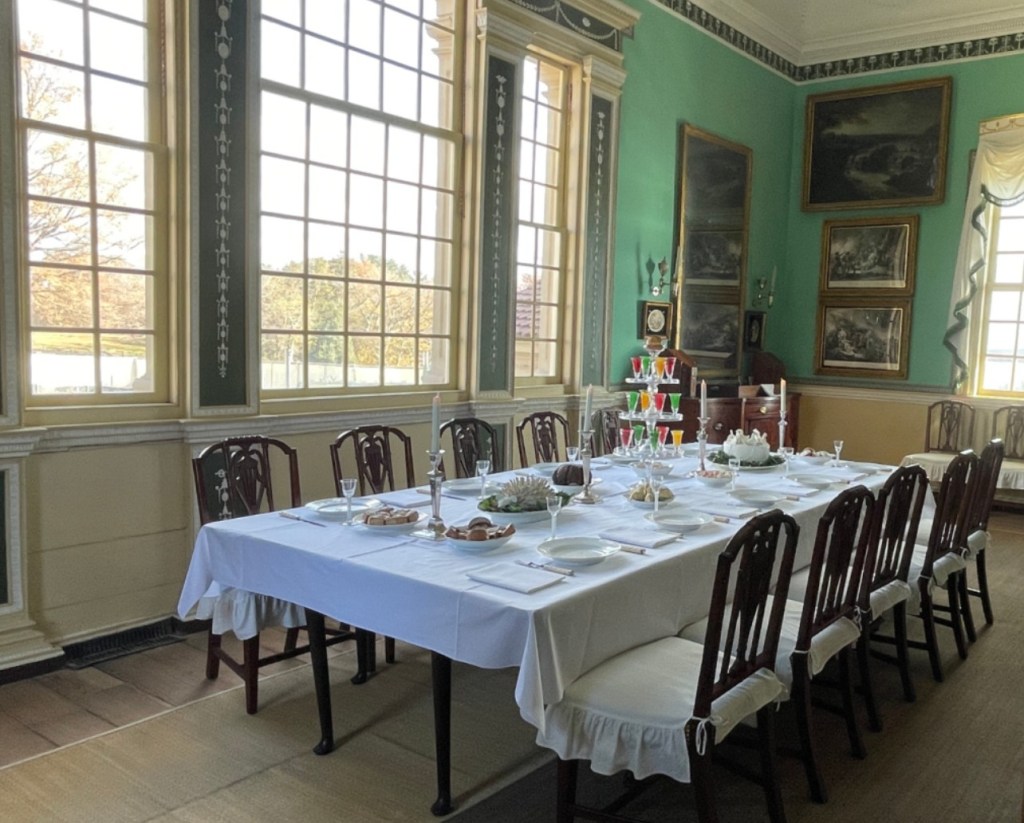
When we visit historic homes today, we see beautifully restored dining rooms like the one below at George Washington’s Mount Vernon estate. Mount Vernon describes it’s dinning room as part of the original 1734 house. It is easy to look at a room like this and admire the furniture, china, and architecture. But details like the double table cloth let me imagine the room in motion – courses arriving, dishes disappearing, cloths being lifted away and an evening unfolding according to customs almost entirely unfamiliar to us now.
Of course, Bound the the Fire asks to look beyond the elegance of those tables to the enslaved people whose extraordinary labor and culinary skill made such elaborate meals possible. That is the larger and far more important story of Deetz’s book.
But sometimes history catches me through the tiniest detail.
And for me, this one was the two tablecloths.


Leave a Reply